Language, Inner Speech, and Neuroscience Lab

Do you talk to yourself in your mind?

We study how inner speech links language, mind, and body – shaping what we think, feel, perceive, and do.

Spotlight

What’s on

Latest news

All news
  • Bo Yao and Eleanor Little presented a talk and two posters on predictive processing, uncertainty, and voice hearing at the joint International Consortium on Hallucination Research (ICHR) and Early Career Hallucination Research (ECHR) meeting at the Technical University of Munich (19-21 October 2026).
  • New paper in Bilingualism: Language and Cognition showing how cultural context shapes the emotional impact of words in a second language. More
  • Bo Yao gave a talk on how autobiographical memory alternates between verbal and visual imagery states, and Guyu Shen and Jiaxuan Chen presented posters on abstract concepts and Mandarin-English sentence processing, at the Joint European Society for Cognitive Psychology (ESCoP) and Cognitive Processes and Modelling (CoPM) meeting in Hangzhou, China (31 August-4 September 2026).
  • New brain-wave (EEG) study in Frontiers in Human Neuroscience exploring how cultural background influences emotional responses to first- and second-language words. More

Our research

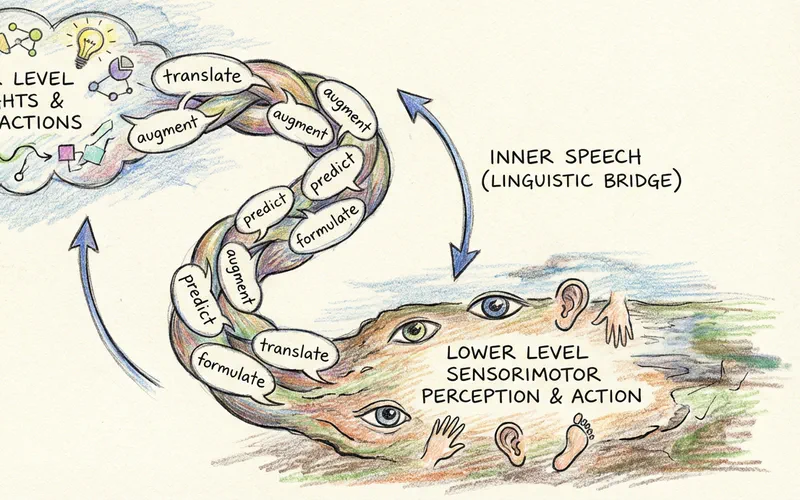
Inner speech, mind, and body

We study how silent language links thought, perception, and physical action – from why we talk to ourselves when facing uncertainty to how words draw on bodily experience and social context. We also explore how inner speech varies across people, and what changes when it becomes repetitive, intrusive, or heard as a voice.

How we study it

Experimental psychology Lab, online, and eye-tracking experiments testing how inner speech shapes perception, attention, and action.
Language and thought analysis Analysing what people say and think aloud to trace how self-directed language shifts in everyday problem solving.
Brain and body measurement Recording brain activity (EEG) alongside subtle tongue, eye, and bodily signals as thoughts unfold.
AI and computational modelling Detecting inner speech from brain and bodily signals, and building self-talking models to understand how minds navigate uncertainty.

Take part

Try a short self-test, take part in one of our studies, or explore what young people created with us.
All ways to take part
3 minutes Do you have an inner voice? Answer 12 questions about how often you think in words, and see how your experience compares with more than a thousand adults. Take the test
20-60 minutes Join a study Online studies you can take from home, alongside experiments in our Lancaster University labs. No studies are recruiting right now. Sign up on the Take part page to hear when one opens. See studies
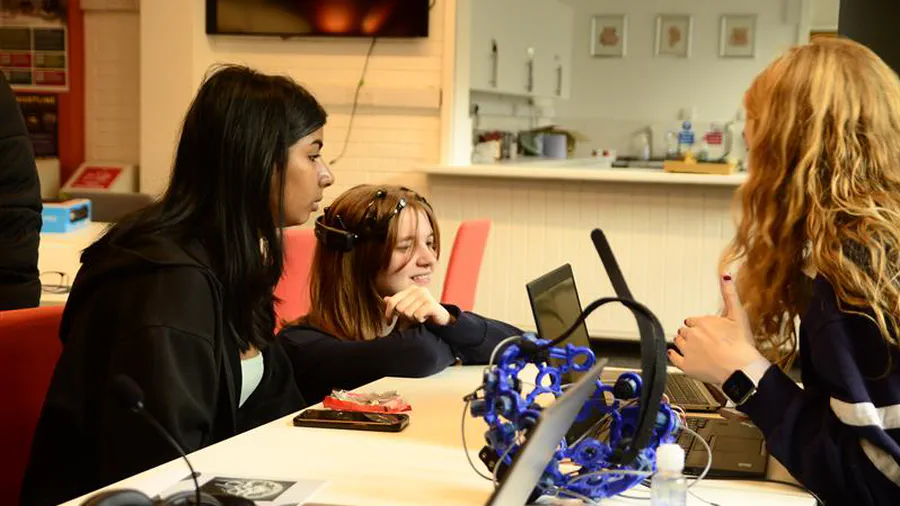
An EEG demonstration at the Voices of the Mind launch Public engagement Voices of the Mind Scientists, artists and young people exploring inner speech through art, sound and technology. Explore

Our team

Researchers and students working across psychology, linguistics, neuroscience, and AI – from postdoctoral fellows and PhD candidates to undergraduate research assistants.
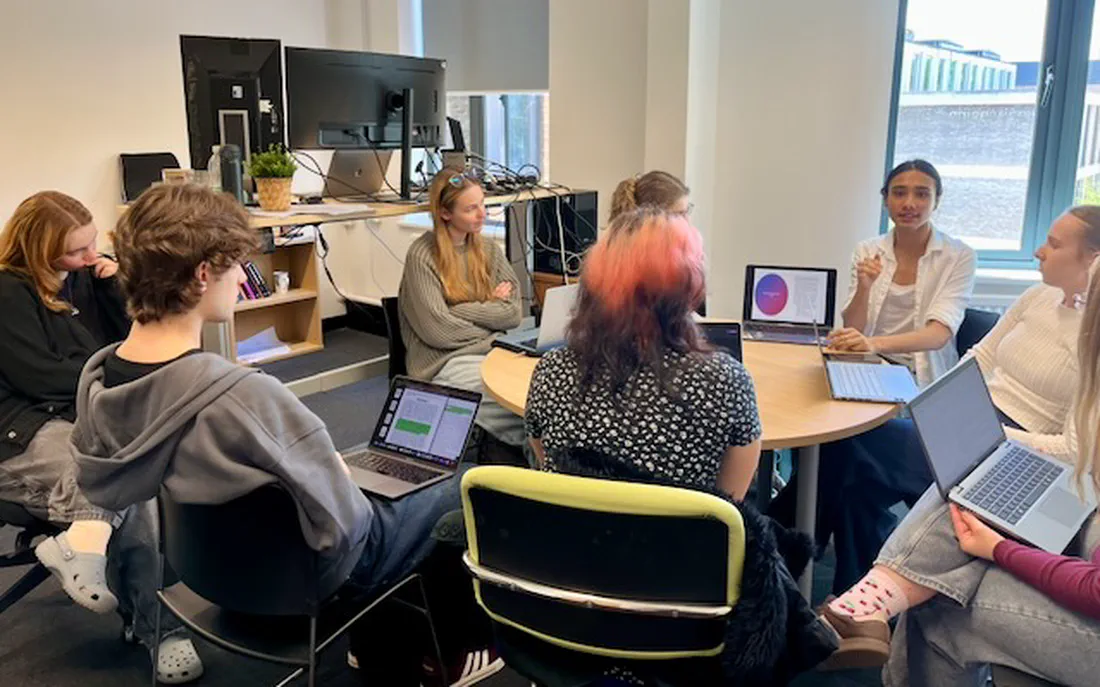
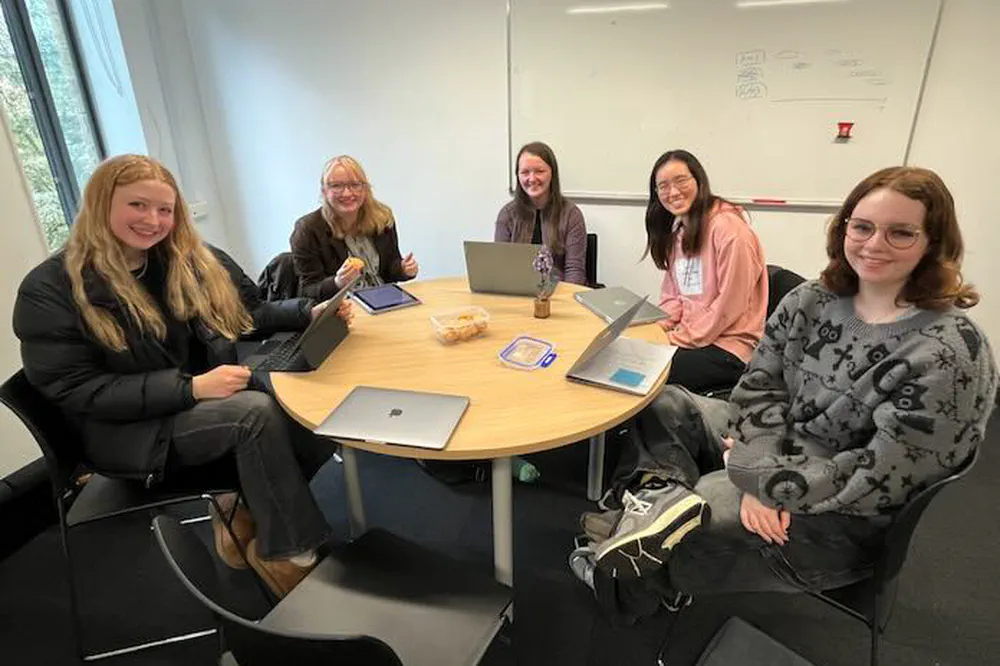
LISN Lab members discussing research around a table

Study with us

PhD. We welcome enquiries about your ideas and what draws you to our research. For entry the following autumn, contact Bo during the autumn term (September-December).

Research assistants. Lancaster students can join S.T.A.R.S., the lab’s undergraduate research assistant group.

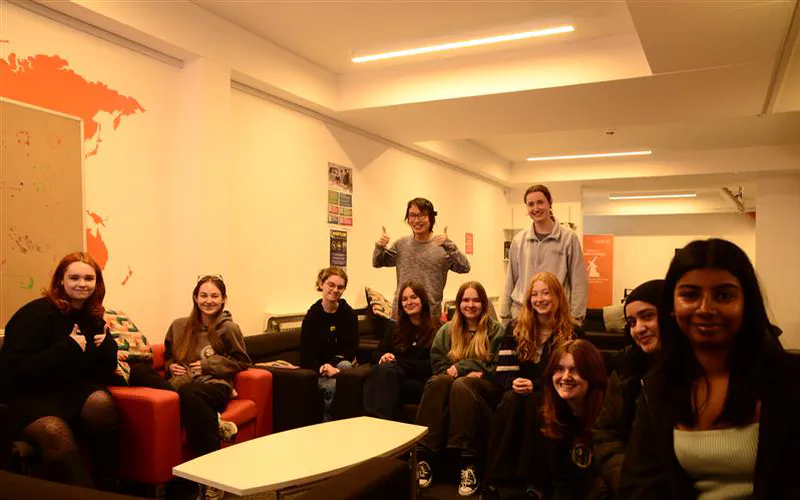
S.T.A.R.S. research assistants at a lab meeting